
 It is no exaggeration to say that FireWire was a key enabler of the digital video revolution. I clearly remember my surprise – and joy – when I first connected my Canon Elura video camera to my Macintosh (as it was called back in 1999) via a simple FireWire cable.
It connected instantly, with no fiddling around. And the images blew me away: High-quality, standard definition, progressive video from a camera that fit in the palm of my hand!
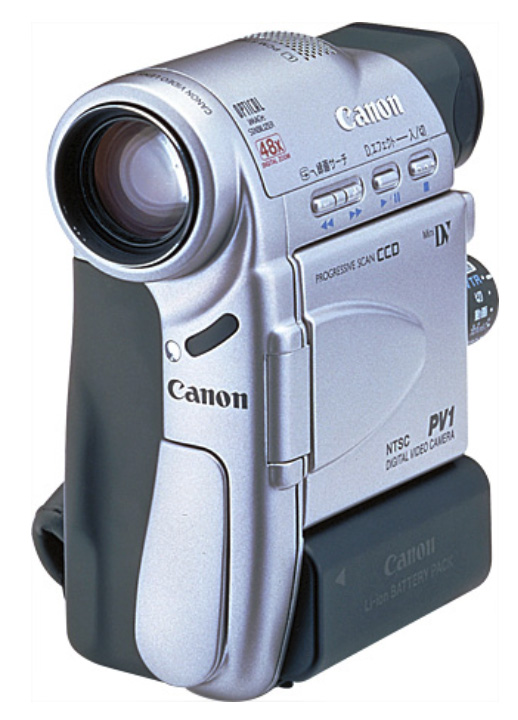 FireWire supported the full digital stream from camera to computer. No conversions, no image quality tradeoffs, full video frame with full 48K stereo audio transferred at a blistering speed of 50 MB/second! Suddenly, a whole new world of portable video and non-linear editing was at my doorstep – and Apple Final Cut Pro version 1.2 was there as a video editor specifically designed for that world.
My life has not been the same since. Nor, I suspect, the lives of many, many other filmmakers.
NOTE: While the sensors and lenses of these small cameras could not match the image quality from a studio camera with ten thousand dollar lenses, FireWire was not the gating factor on image quality. It transferred every pixel untouched.
Twenty-six years later, while digital video is now firmly established, Firewire’s role in the story is ending. macOS Tahoe no longer supports FireWire.
Kit Laughlin commented: “Because I have dozens of old FireWire 400 and 800 HDDs, I will not be updating. I will very interested to see how many of these old drives can be read, and contents transferred…”
The FireWire specification is IEEE-1394. (FireWire was an Apple brand name. Most PCs referred to it as IEEE-1394, though i.Link (Sony) and Lynx (Texas Instruments) were also used. It was similar to USB-2 in speed, though not in configuration.
Allan Tépper recently blogged: “For those of you [who] mistakenly believe that you are immune if you have a converter from FireWire to Thunderbolt, you are not. The only current solution is to use an older version of macOS, up [to] and including Sequoia (for FireWire video devices and FireWire hard drives, not for FireWire audio interfaces, which were removed from Core Audio earlier).”
Last week, I spoke with Thomas Coughlin, past President of the IEEE, asking if it were possible for a third-party company to release a FireWire-to-USB converter. Tom said that it was most likely possible technically, but the bigger issue was licensing. Existing licenses may not allow it. In other words, while a third-party converter may be possible, it isn’t likely.
NOTE: Based on past history, I don’t see any case where Apple will bring back Firewire, nor make an Apple-branded converter.
If you have any data on any FireWire devices that you need to keep, this is your last opportunity to get it transferred to USB or Thunderbolt storage or lose it entirely. This incudes all data stored on DV and DVCAM tapes, unless you have a drive that connects using SDI, S-Video, or analog RCA cables. However, only SDI will deliver image quality equal to FireWire.
NOTE: If you are looking for a codec to transfer your DV / DVCAM media into, use ProRes 422. That equals the spec of all SD cameras. You can use ProRes 4444, but you won’t get any better images with it.
FireWire has taken us all on an amazing trip: Fast speeds (for then), image quality equal to what the camera could create and an extraordinary ease of use. It opened worlds we never knew existed. And provided filmmakers around the the world with new ways to tell their stories.
That is a legacy to be proud of.



18 Responses to Farewell FireWire! Yours Is a Proud Legacy
← Older Comments-
 NotaLudditeJustLazy says:
October 21, 2025 at 9:15 am
-
 Brad Bradley says:
October 22, 2025 at 11:32 am
-
 Larry says:
October 22, 2025 at 12:15 pm
← Older CommentsUsing an Avid Digidesign 003 for audio recording is the PRIMARY reason I have held onto my MacPro 5,1 for so long. As more things “break” or are not supported, I will have to buy something newer, but it’s going to be a major overhaul on many levels that I’m not looking forward to.
And I’ll still be holding on to this old workhorse as a back-up!
I’m curious… why is everybody yelling that you are going to lose all of your data on your firewire hard drive? Firewire is only the method of transporting your data to and from the storage media. The drive is formatted, usually as HFS+ or as APFS or exFAT to run with a Mac system. Just take your drive out of the firewire case and put in into a case or drive dock that supports USB, USB c or Thunderbolt and you should be good to go. If your RAID is a software driven RAID, Apple’s RAID software or SoftRaid by OWC, you should be able to put the drives in a multi drive case set as JBOD and be able to boot and use them. If your RAID is a hardware RAID with firewire then you are under the gun to move it to another RAID or drive with firewire so you don’t lose data.
Brad:
Most early FireWire drives cannot be easily disassembled, so removing the drive is not an option. FireWire was released in 1995, HFS+ did not exist before 1998. ExFAT was released in 2006. FireWire was essentially replaced by Thunderbolt in 2017, the same year that APFS was released.
FireWire RAIDs did not exist.
For these reasons, it is generally not possible to insert an older FireWire drive into a dock and read the data directly. It’s formatting is no longer supported.
Larry